a mixed-methods study uncovering why nutrition-conscious students still struggle to eat well on campus.
my role
Led research design, recruitment strategy, and screener creation
Conducted field studies and interviews
Analyzed survey results
Synthesized insights and translated them into early app concepts
timeline
september - december 2024
tools
Figma, Google Suite
↦ “Behavior is a function of the Person and the Environment.” (B = f(P,E))
-Kurt Lewin
↦ why?
how might we help nutrition-conscious students sustain healthy eating when real-world constraints keep winning?
Transitioning into college life means juggling classes, jobs, and social commitments—and nutrition often falls to the bottom of the list. Even students who care about eating well find it difficult to sustain healthy habits on campus.
With obesity rates nearly doubling for young adults in the U.S. (WHO, 2024), unhealthy eating in these formative years is a critical concern.
Our research focused on Nutrition-Conscious Undergraduate College Students (NCUCS): students who value health and nutrition but face real barriers in making those choices day to day.
Prior studies show that despite understanding concepts like balanced meals or the food pyramid, most students fail to consistently practice them (Yun et al., 2018). We wanted to dig deeper into why—and identify strategies that could make healthier eating not just possible, but sustainable.
research questions (framing the work)
1) identify potential barriers to healthy meal access for NCUCS
Framer is a no-code tool for building and publishing responsive websites—perfect for anyone creating modern, high-performance pages without coding.
2) assess the effectiveness of existing nutritional access and resources
Framer is fully visual with no code needed, but you can still add custom code and components for more control if you're a designer or developer.
3) evaluate behavior-change strategies to motivate and guide NCUCS
This is a free, responsive FAQ section for Framer. Drop it into any project, customize styles and text, and use it to save time on support or info pages.
4) understand NCUCS preferences to align solutions with their needs
After duplicating, copy and paste the component into your Framer project. Then edit the questions, answers, styles, and animations as needed.
the stakeholders
The student is the center, but the ecosystem shapes the choice
We considered both students and the systems influencing their food decisions:
Students (NCUCS): Primary participants whose lived experiences shaped the insights
University Administration & Dining Services: Responsible for food options, wellness initiatives, and student life programs
Local Food Suppliers & Grocery Stores: Influence access, affordability, and variety near campus
Nutrition & Dietetics Faculty: Potential advocates and partners for further research and support
Parents & Families: Financial and emotional supporters of student health
Student Organizations: Nutrition and wellness clubs that could amplify solutions
Design, Finance, and Marketing Teams: Future collaborators in developing and scaling interventions like NutriLink
↦ participant profile
targeting criteria
To keep our study focused and insights meaningful, we narrowed our participant pool to Nutrition-Conscious Undergraduate College Students (NCUCS)—undergrads who already care about eating healthy but struggle to do so in practice. This helped us avoid broad, surface-level findings and instead dig into the unique behaviors, frustrations, and motivations of a health-aware group.
Participants were:
Currently enrolled undergraduates (ages 18–24)
Self-identified as nutrition-conscious with a genuine interest in improving health through diet
Living in or near a campus environment where dining and student routines shaped daily choices
ideal research particpants
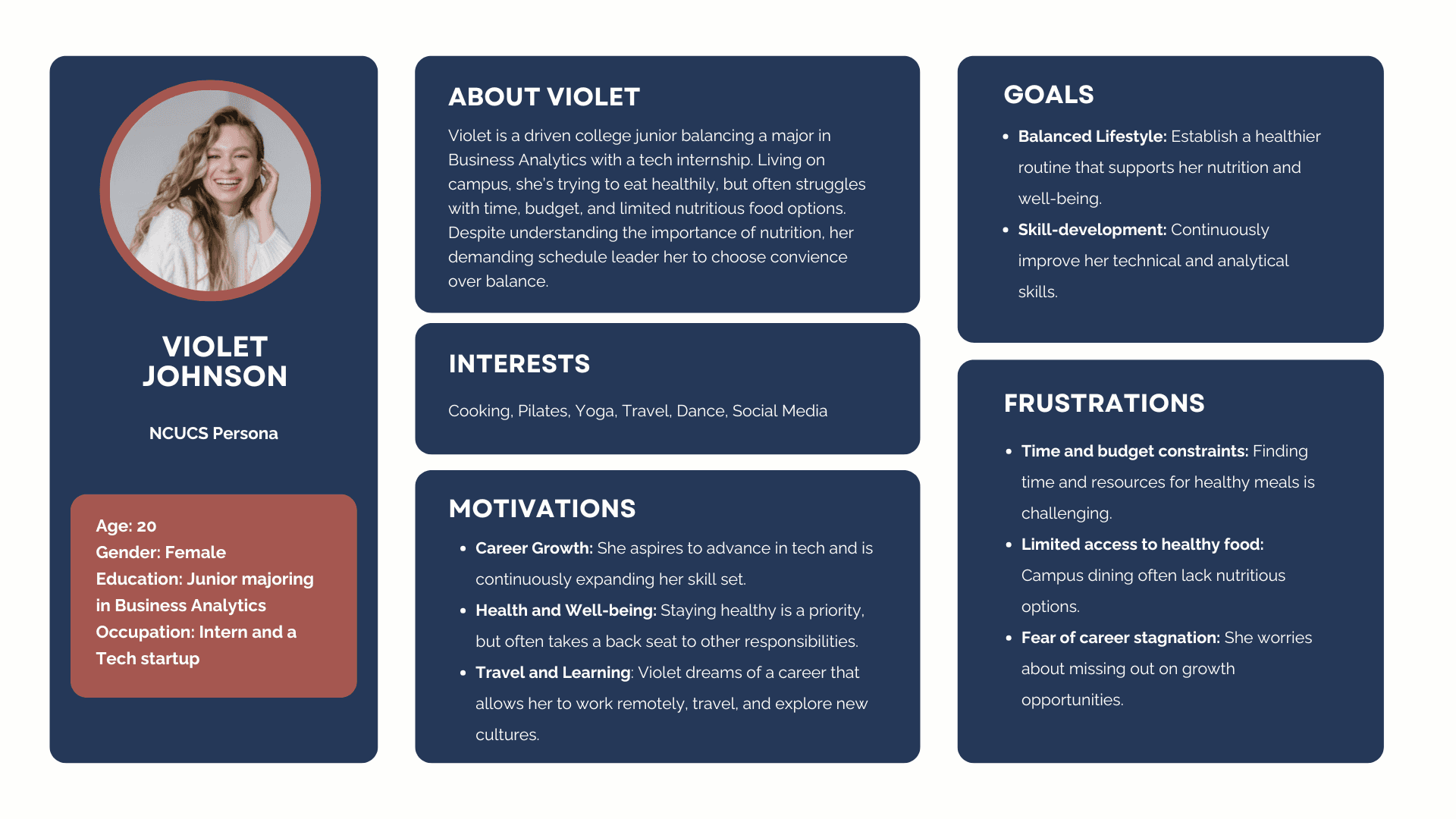
To align the team around our target audience, we created a composite persona:
Violet Johnson, a 20-year-old student who values health but struggles to balance nutrition with time, budget, and social pressures.
Violet helped us stay focused on students who are motivated to eat well but encounter systemic and emotional barriers along the way.
Empathy Map (Synthesis Artifact)
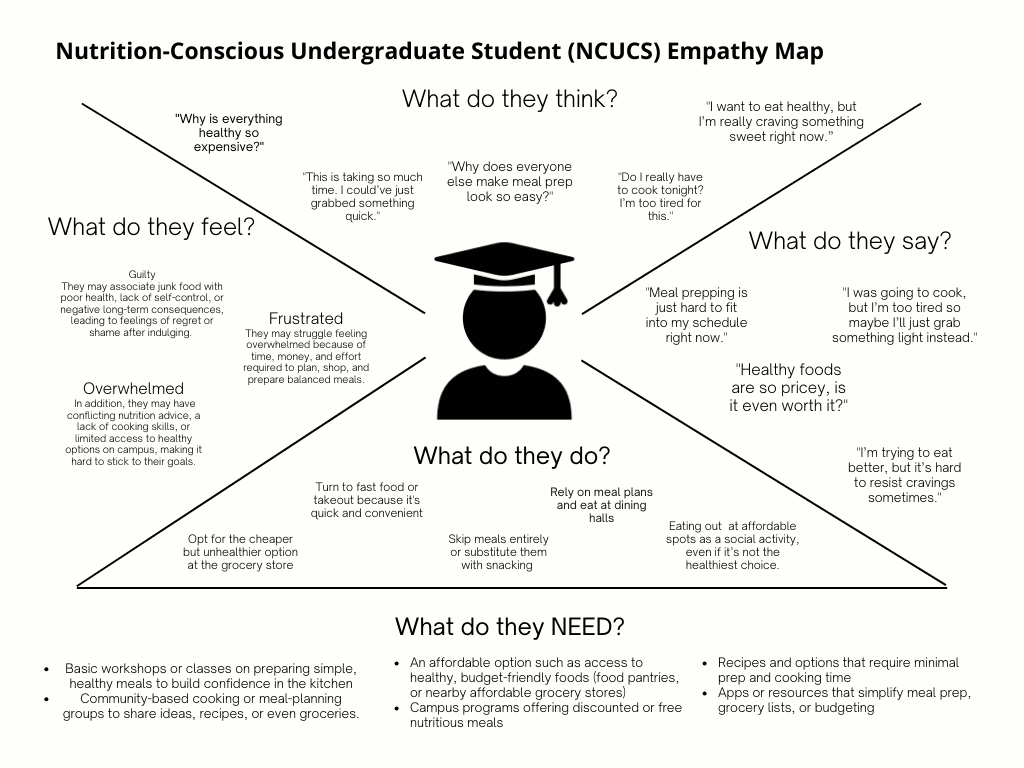
To ground our insights in lived experience, we created an empathy map synthesizing patterns across interviews, field observations, and survey responses. Rather than representing a single participant, this artifact captured shared emotional drivers, pain points, and coping behaviors across NCUCS—helping the team align on where friction showed up most consistently.
participant limitations
Like all qualitative research, our participant pool came with boundaries:
sample bias
Framer is a no-code tool for building and publishing responsive websites—perfect for anyone creating modern, high-performance pages without coding.
self identification
Framer is fully visual with no code needed, but you can still add custom code and components for more control if you're a designer or developer.
representation
This is a free, responsive FAQ section for Framer. Drop it into any project, customize styles and text, and use it to save time on support or info pages.
By recognizing these limitations, we interpreted findings more thoughtfully and highlighted where future studies (like diary studies or expert interviews) could expand perspective.
↦ research strategy
a phased plan to move from exploration to action
Research plan & phases:
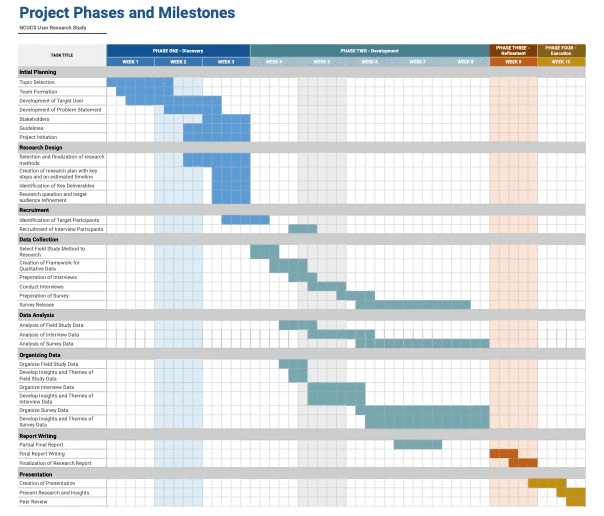
To keep the project focused and actionable, our team built a phased research plan:
Phase One – Discovery: Clarified objectives, problem statement, stakeholders, and refined the recruitment plan, selection criteria, and methods
Phase Two – Development: Finalized target participants and moved into data collection (qual framework creation, interviews, and survey release). Analysis drew from field study + survey + interview data, and we organized insights into themes.
Phase Three – Refinement: Prioritized partial report writing and final research synthesis
Phase Four – Execution: Presented research and insights, strengthened presentation skills, and incorporated peer/expert feedback
This structure helped us move systematically from broad exploration to specific, research-backed opportunities.
screener
To confirm fit, we used three key questions:
Are you currently enrolled as an undergraduate student in a college program?
How important is maintaining a healthy diet to you?
How challenging do you find it to maintain healthy eating habits with your current schedule and lifestyle?
recruitment strategy
We wanted a diverse but focused pool that reflected our niche. We used a multi-channel approach:
Campus forums & platforms: Reddit, Slack, and Facebook student pages
In-person introductions: Dining halls, cafes, and wellness spaces
Personal networks: Peers and friends, while ensuring criteria fit
To reduce sampling bias, we balanced recruitment across online, in-person, and personal channels.
methods used
We looked into both depth + breadth: what students do, and why
field studies
Observed behavior in dining halls, campus cafes, and farmer’s markets
Captured layouts, peak-hour choices, and social group dynamics
Example finding: salad bars tucked away in low-traffic areas reduced visibility and selection
interviews (n=8)
Semi-structured interviews captured personal stories, motivations, and frustrations
Surfaced emotional dynamics like stress lowering motivation, and friends shaping choices
survey (n=57)
Validated themes at scale
Key signals: 81% cited time as the biggest barrier; 72% were dissatisfied with campus options; 37% named cost as a moderate to major barrier
Together, these methods created a full picture: not just preferences, but the real constraints shaping everyday behavior.
↦ what we learned
The barrier isn’t knowledge. It’s friction—structural, social, and emotional.
Across field observations, interview narratives, and survey data, four themes emerged:
Barriers to Healthy Eating
Social and Peer Influences
Motivations and Emotions
Knowledge and Education
These themes helped us understand not just what got in the way, but why—and where design could close the gap between intention and reality.
theme 1: barriers to healthy eating
Students weren’t unmotivated—they were constrained
Across all methods, the same challenges surfaced: limited time, unappealing campus environments, and financial pressure. These barriers consistently forced compromises, even when students wanted to choose healthier options.
time constraints (largest barrier)
Framer is a no-code tool for building and publishing responsive websites—perfect for anyone creating modern, high-performance pages without coding.
campus environments (healthy options exist, but don’t compete)
Framer is fully visual with no code needed, but you can still add custom code and components for more control if you're a designer or developer.
budget limitations (not universal, but meaningful)
This is a free, responsive FAQ section for Framer. Drop it into any project, customize styles and text, and use it to save time on support or info pages.
theme 2: social & peer influences
Food choices aren’t individual decisions—they’re group behavior
Group dynamics often led to indulgent choices (pastries, fast food runs)
Students dining solo leaned healthier (salads, fruit)
Contradictory pressures surfaced: “I prioritize convenience over health with friends,” but also “Healthy roommates inspire me.”
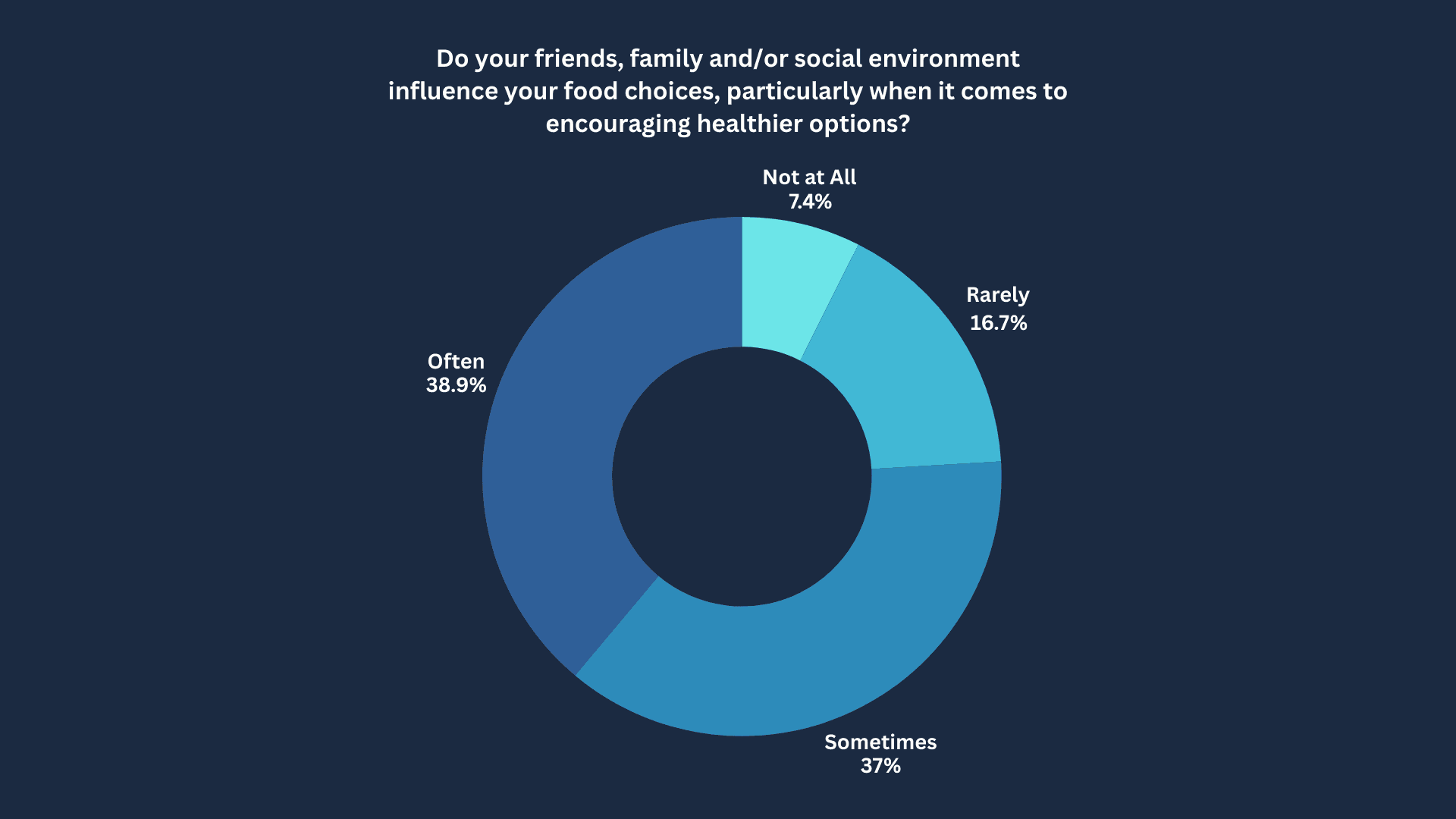
Survey signal: 76% said their social environment influenced choices (most rated it as moderate). Living arrangements amplified peer impact—students with roommates reported stronger influence than those living alone.
theme 3: motivations & emotions
Awareness wasn’t enough when stress showed up
Students understood food’s impact: “If I’m sad, I’ll try and eat better since food has a big impact on how I feel.”
But stress and fatigue disrupted intentions
61% said they were unmotivated to eat healthy when stressed or busy—even though 72% reported confidence in nutrition knowledge
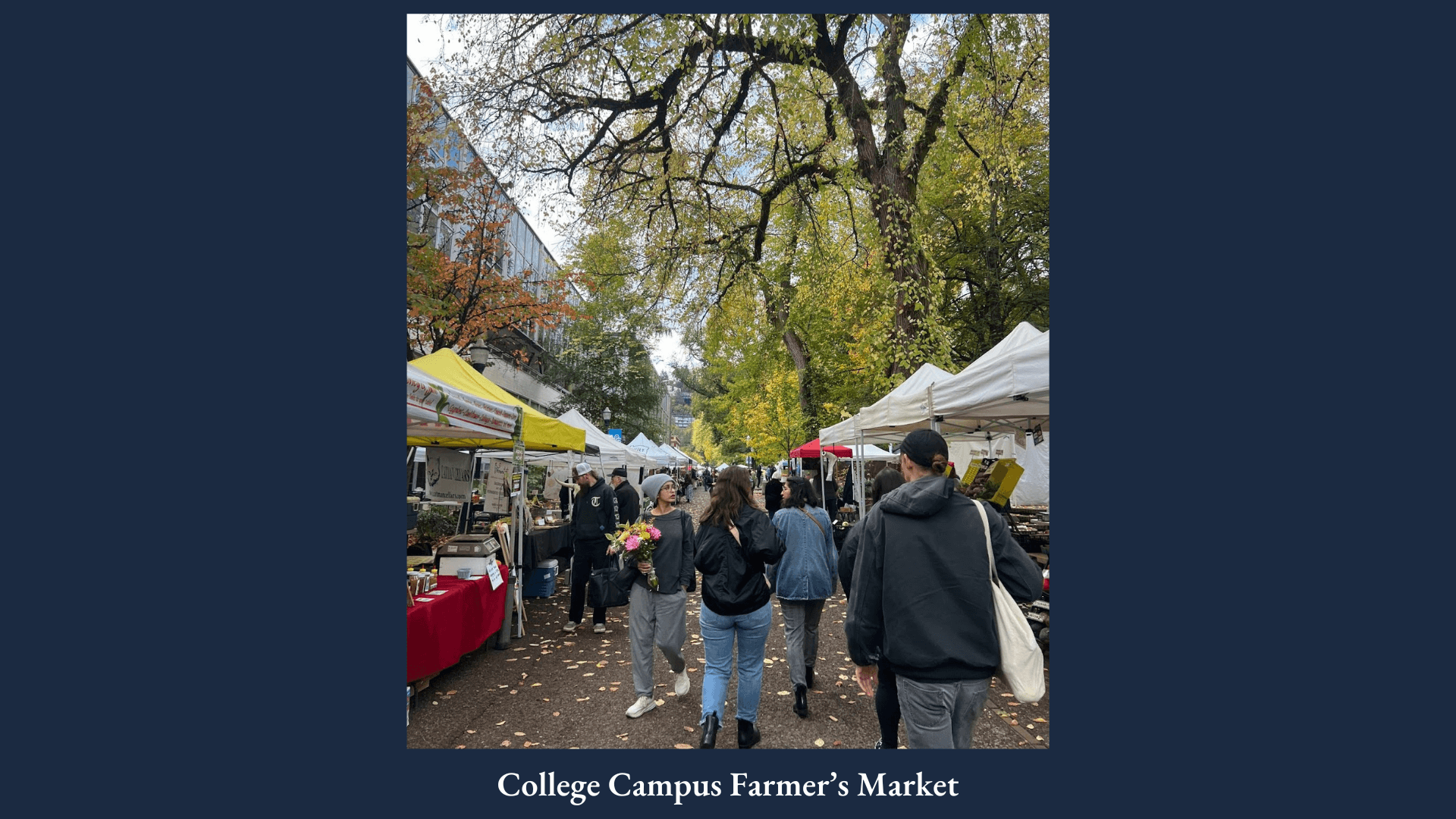
Positive environments (like farmer’s markets) increased intentional, healthier choices—showing how much setting shapes behavior.
theme 4: knowledge & education
They know the basics. They want formats that fit student life.
Students weren’t short on knowledge—they were short on engaging, accessible formats.
Social media dominated: 79% said TikTok/Instagram influenced food ideas
Students preferred quick, visual recipes over traditional resources
Interviews reinforced the habit: “Social media is where I go for quick meal ideas—it’s fast, easy, and fits into my routine.”
The opportunity: educational interventions must meet students where they already are—fast, visual, and community-driven.
↦ insights to action
key findings (what held across methods)
In order to take action, we needed to know what prioritize first to reduce friction
time constraints
Time constraints are the single most significant barrier — 81% reported they often or always sacrifice nutrition for convenience.
budget pressures
Budget pressures impacted a subset of students — 37% identified affordability as a moderate to significant challenge.
social dynamics
Social dynamics play a dual role, with friends sometimes encouraging indulgence and other times inspiring healthier choices.
motivation & emotional wellbeing
Motivation and emotional well-being were tightly connected to eating habits, with stress and fatigue often undoing good intentions.
campus dining environment
Campus dining environments don’t set students up for success — 72% were dissatisfied with healthy food availability, and healthier options were often hidden in low-traffic spaces.
education & awareness
Education and awareness weren’t lacking, but the preferred channels were digital, visual, and fast-paced (TikTok, Instagram).
reccomendations
future research
Framer is a no-code tool for building and publishing responsive websites—perfect for anyone creating modern, high-performance pages without coding.
conceptual solutions
Framer is fully visual with no code needed, but you can still add custom code and components for more control if you're a designer or developer.
business goals & impact
For students: Make healthy eating accessible, affordable, and socially supported
For universities: Improve dining programs, wellness initiatives, and student satisfaction
For partners (suppliers, faculty, student orgs): Create pathways to educate, engage, and support
For design teams: Translate real constraints into actionable products and services (not just awareness campaigns)
↦ reflection
what changed in my own practice
Working on NutriLink reminded me that eating well isn’t just about knowing what’s healthy—it’s about navigating the realities of time, stress, money, and social influence. Our research showed that awareness wasn’t the problem; students already understood nutrition. What they lacked were systems and supports that made healthy choices easier and sustainable.
For me, this project was a turning point in my growth as a researcher. It pushed me to balance qualitative nuance with quantitative validation—listening deeply to student stories while also grounding insights in data. That balance not only made our findings more credible, but it also taught me how to translate human context into actionable design opportunities.

NEXT WORK
joystick
a game discovery platform built for players who want to feel seen, safe, and supported.

