a sustainability-focused app reducing food waste one household at a time: empowering users to save money, cut waste, and build eco-friendly.
impact: collaborated with a team of 4 other graduate students to build and test core features, develop an inclusive design system, and position the platform to reframe food waste as an educational opportunity and fill a critical gap in the sustainability market.
my role
UX/UI Designer, UX Researcher, UX Writer
timeline
september - december 2024
tools
Figma, FigJam, Canva, Google Suite
↦ introduction
Food waste is one of the biggest (and quietest) contributors to environmental damage and food insecurity — yet most of it happens right in our own kitchens. Every year, 2.5 billion tons of food are wasted globally. In the U.S. alone, nearly 40% of food goes uneaten (Recycle Track Systems, 2024), costing families money and contributing to a global crisis.
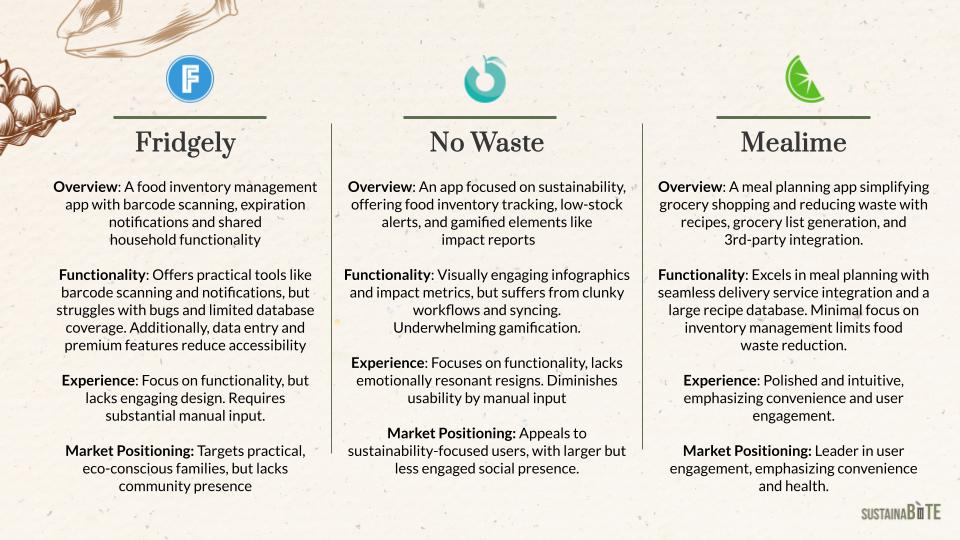
Current tools only address fragments of the problem: meal planning apps focus on recipes, trackers log spending, and sustainability tools provide education — but none bring everything together in one accessible, user-friendly platform.
That’s where SustainaBite comes in. Built by a collaborative team of five, the app helps households track groceries, receive reminders, and repurpose ingredients with personalized recipes — reframing food waste as an everyday opportunity to save money, live sustainably, and build healthier habits.
the opportunity
To reduce the impact of food waste on both households and the planet by creating an app that is:
Practical (inventory tracking and reminders).
Personalized (AI-powered recipe suggestions).
Educational (tips for composting and sustainable living).
Engaging (celebrating wins through savings trackers and impact badges).
the solution
SustainaBite is a mobile app designed to help users:
Track grocery inventory easily.
Get recipe ideas based on what they already have.
Receive reminders before food expires.
Learn sustainable habits like composting.
Celebrate their impact with savings insights and achievements.
By reframing food waste not as failure, but as opportunity, SustainaBite makes sustainable living feel personal, possible, and even joyful.
building sustainabite
Meet SustainaBite, created through collaboration in a cross-functional team to design and test core features. Here’s how we came together:
Conducted surveys and interviews with 40+ participants, identifying forgetfulness and over-purchasing as key drivers of waste.
Developed personas and journey maps to guide user-centered design.
Prioritized practical features over gamification based on user feedback.
Positioned SustainaBite to fill a critical gap in the sustainability app market.
↦ defining the user
meet jessica and mitchell
We created two personas to capture our core audiences:
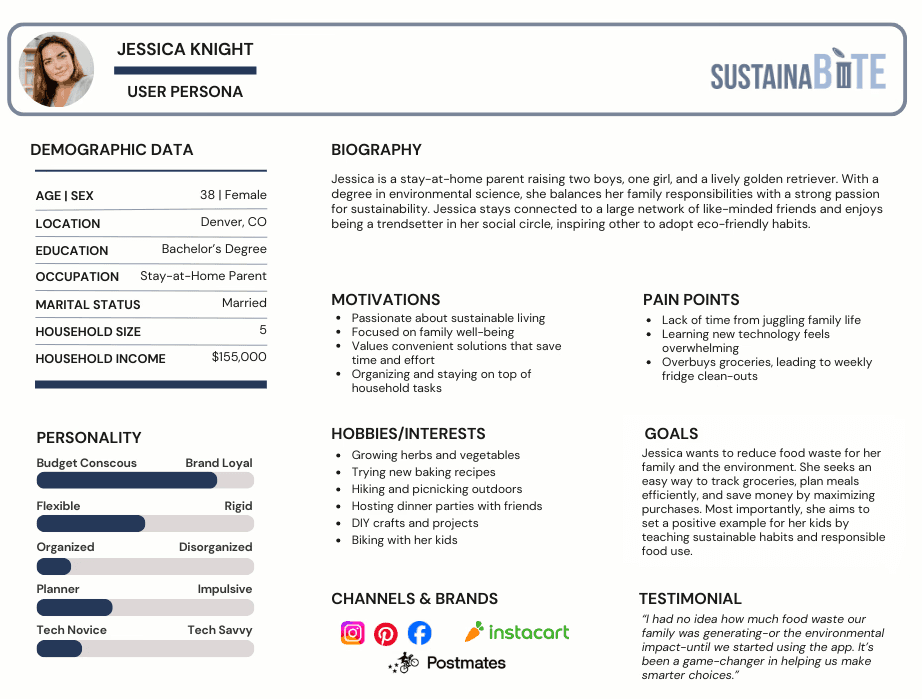
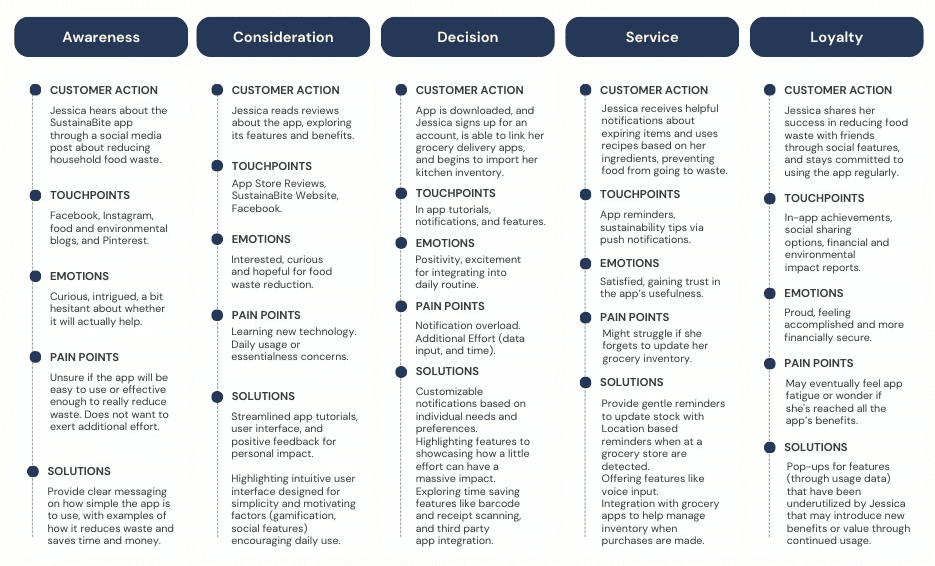
Jessica Knight (38, stay-at-home parent, Denver) – Wants to reduce waste for her family, stay organized, and set a positive example for her kids. Motivated by sustainable living but struggles with time, overbuying, and tech overwhelm.
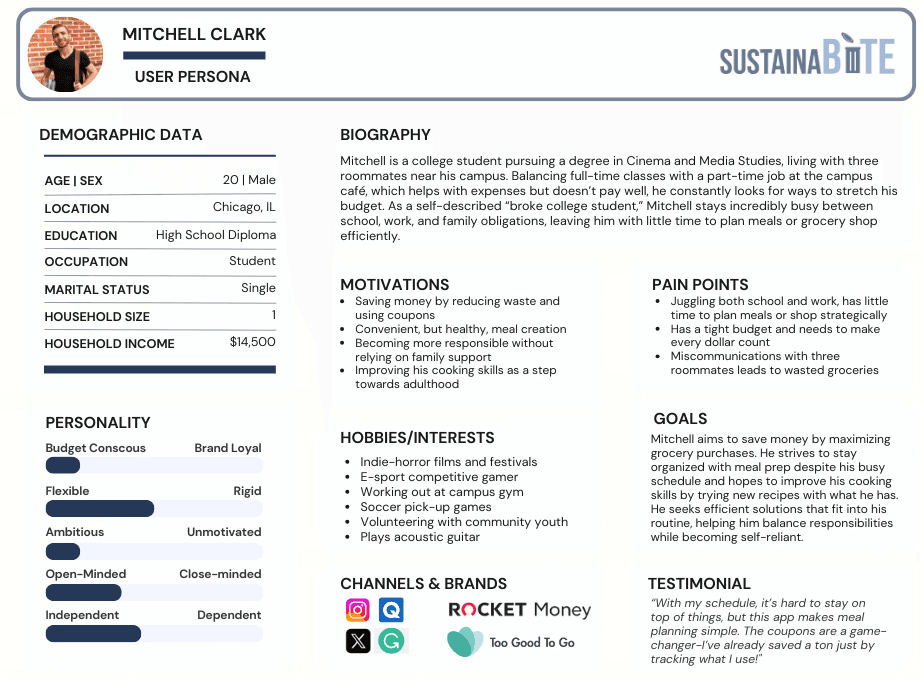
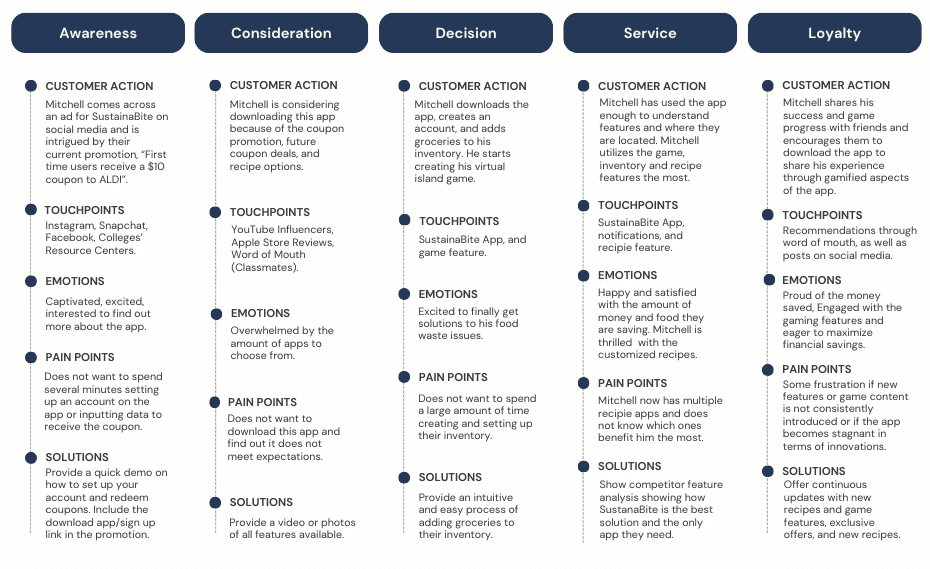
Mitchell Clark (20, college student, Chicago) – Budget-conscious, juggling school, work, and roommates. Needs easy ways to stretch every dollar and avoid duplicate grocery purchases.
Their journey maps revealed similar frustrations (forgotten food, lack of organization, wasted money) but different motivators: Jessica was driven by family + sustainability, while Mitchell cared most about budget + efficiency.
Designing for both meant building a platform that could flex between family-scale and individual needs.
↦ research and insight
mixed methods
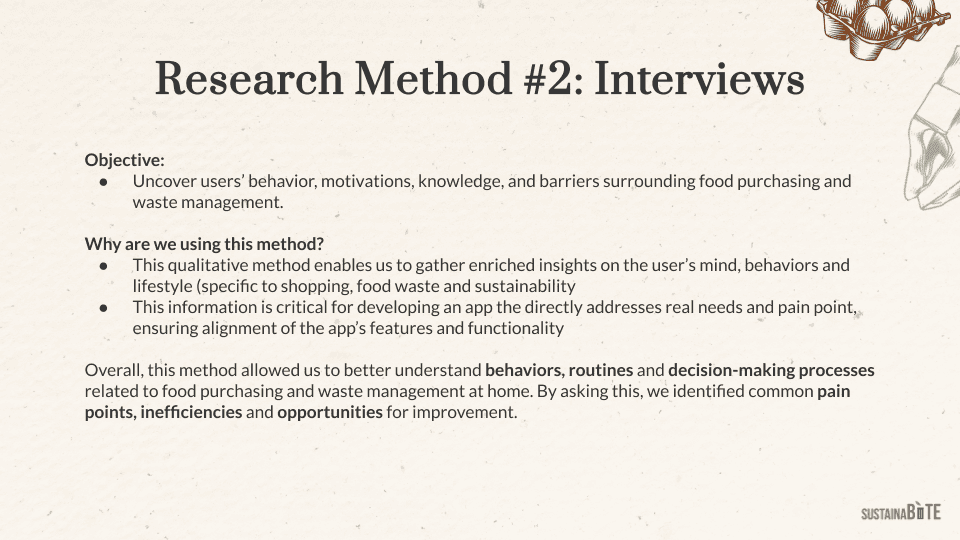
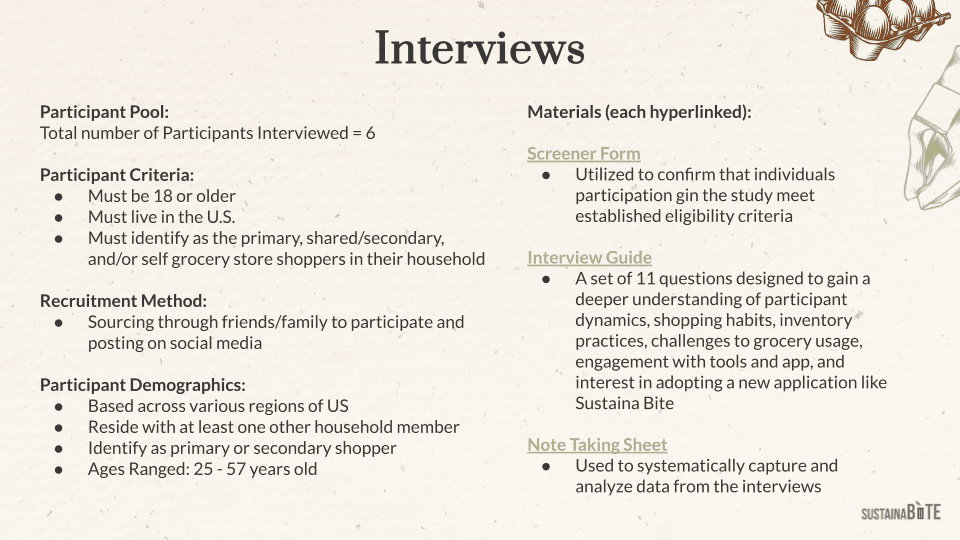
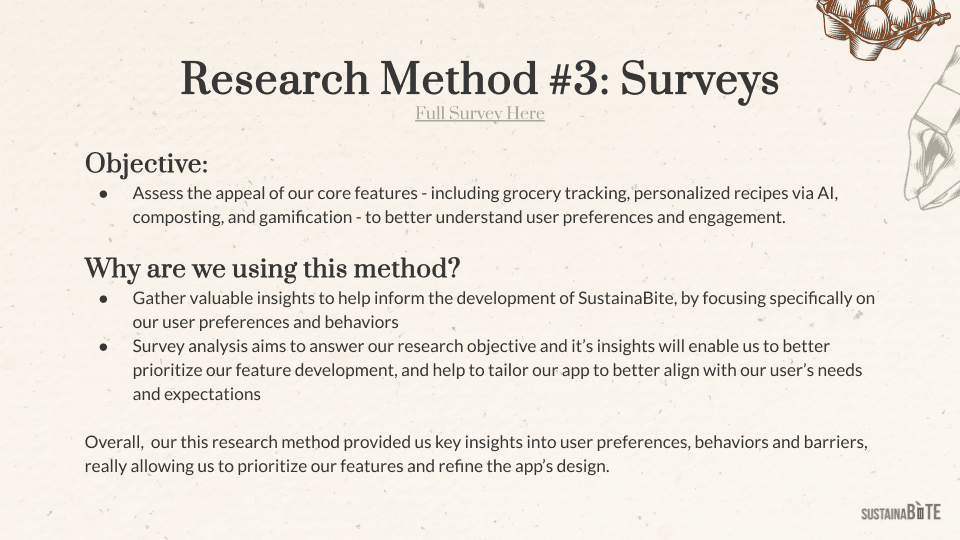
To understand how people manage groceries and waste, our team conducted a mixed-methods study: surveys (35 participants), competitive analysis, and six interviews with primary household shoppers.
Our research objectives included:
Uncovering users’ behavior, motivations, knowledge, and barriers surrounding food purchasing and waste management.
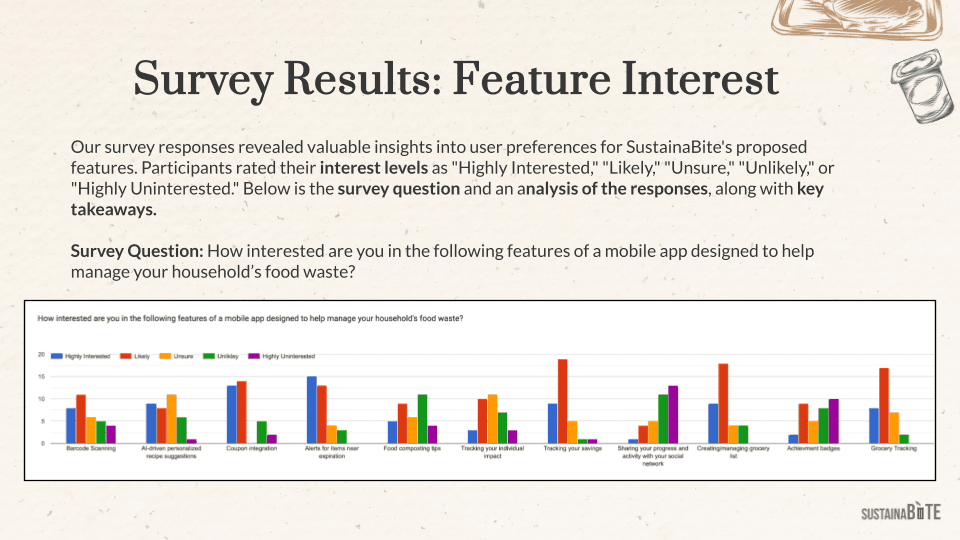
Assessing the appeal of our core features - including grocery tracking, personalized recipes via AI, composting, and gamification - to better understand user preferences and engagement.
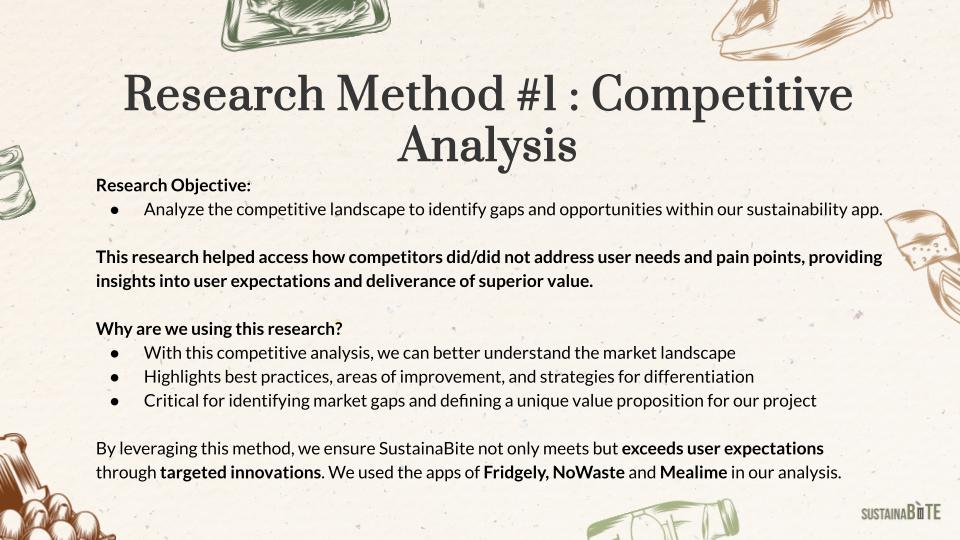
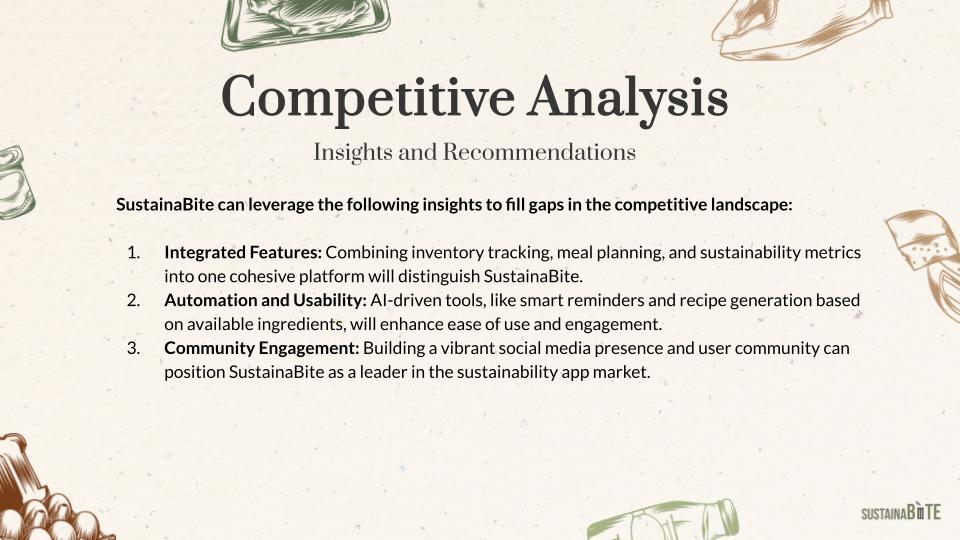
Analyzing the competitive landscape to identify gaps and opportunities within our sustainability app.
Drag the slides below to find out more about our results!
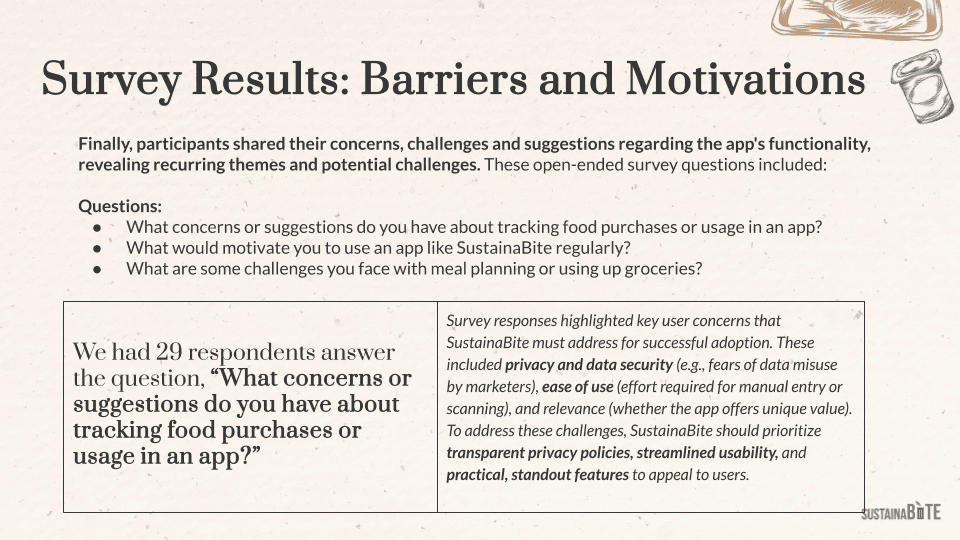
what we found
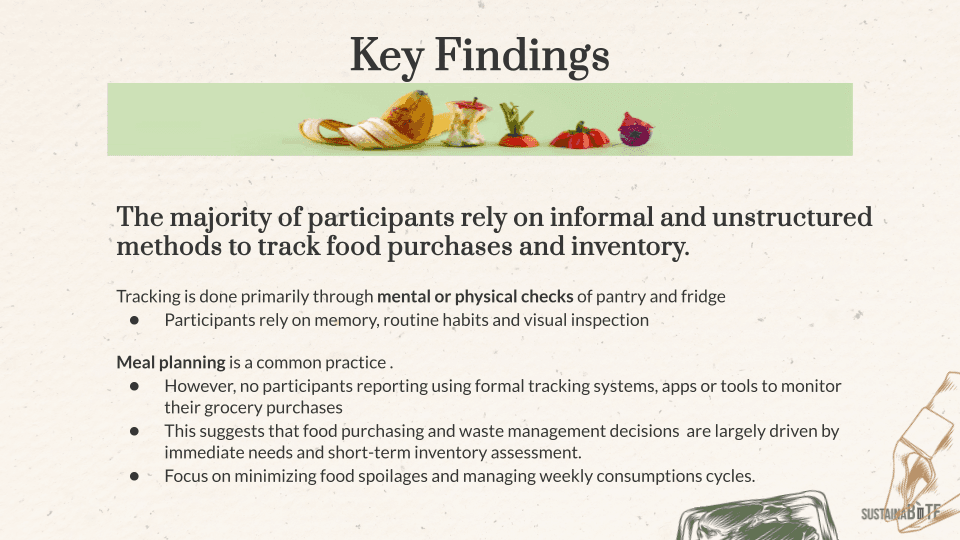
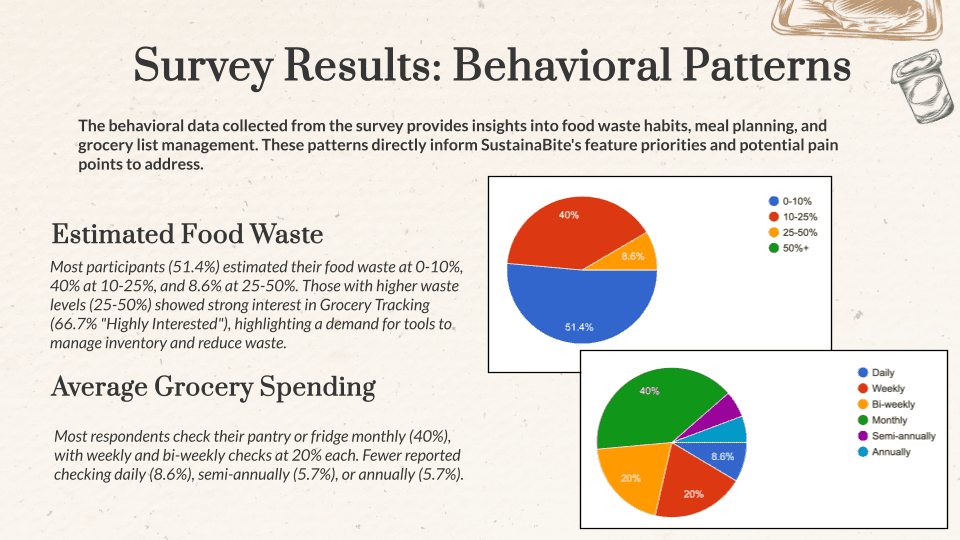
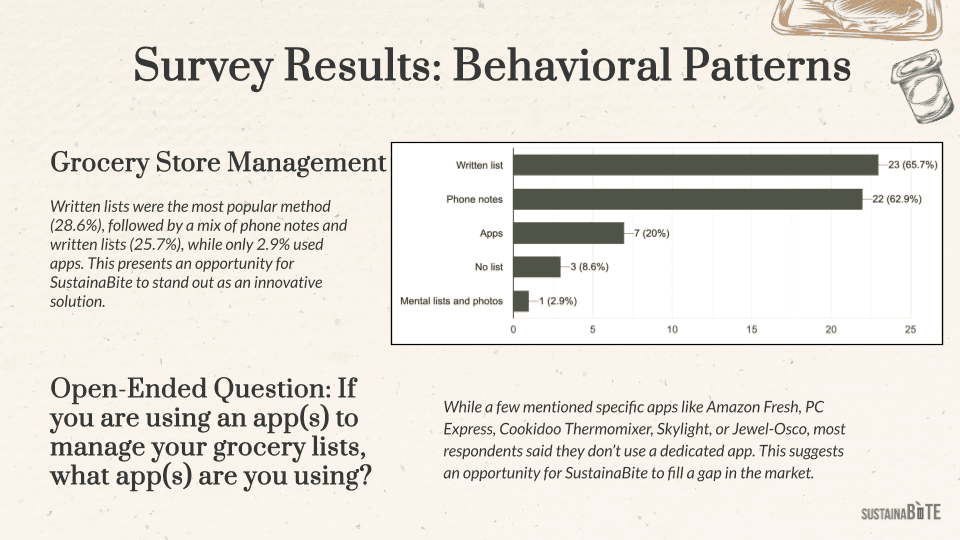
Most households rely on memory or visual checks instead of structured tracking tools.
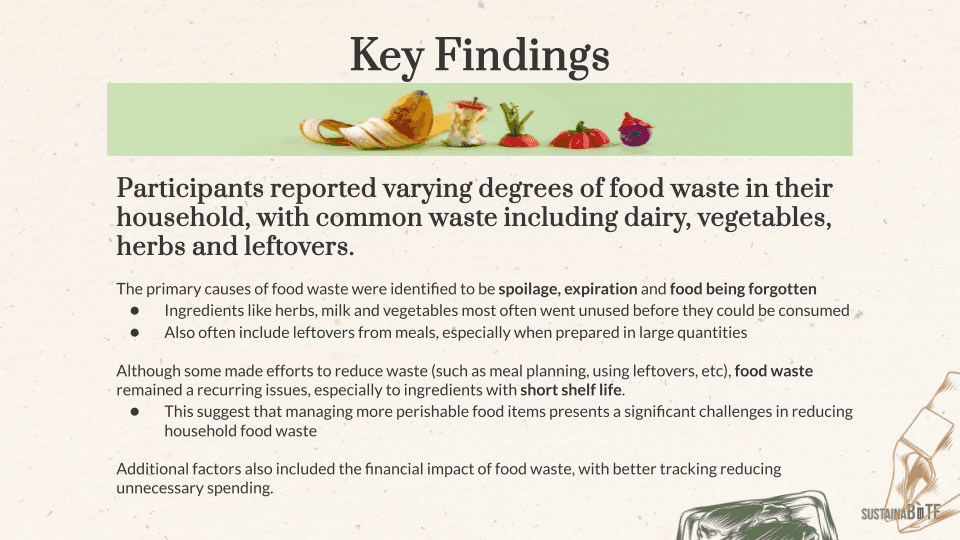
The biggest causes of food waste: forgetfulness (71%) and overbuying (17%), especially with perishable items like herbs, vegetables, and dairy.
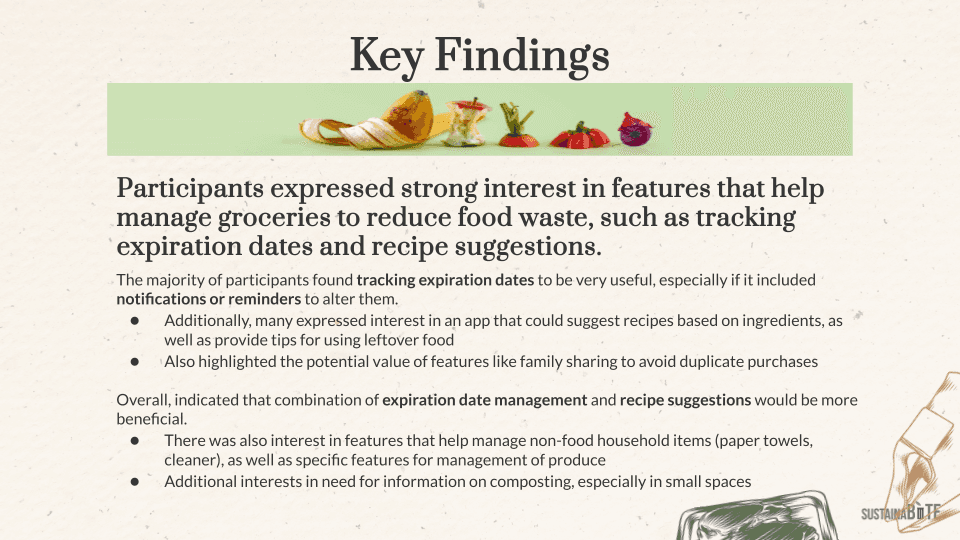
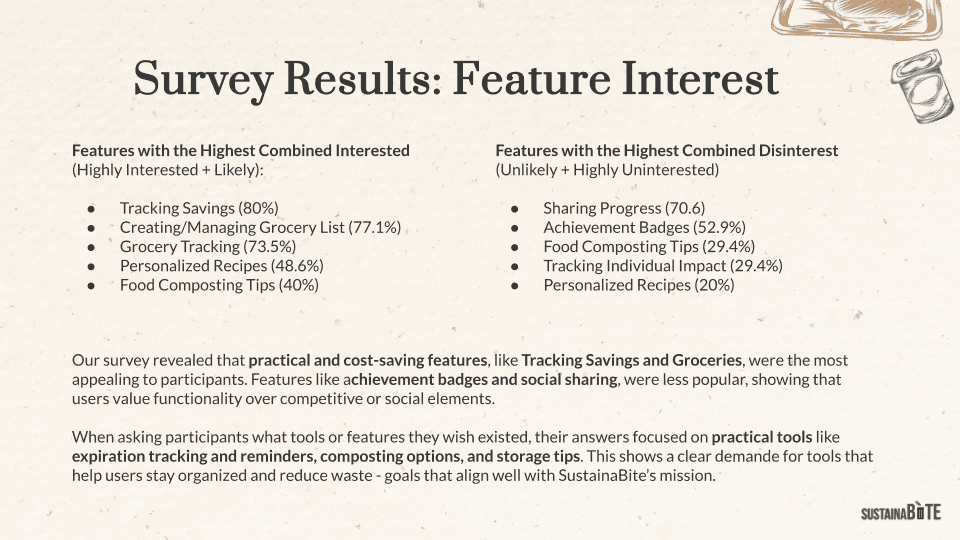
Participants showed strong interest in practical tools (savings tracker, grocery lists, expiration reminders) and less interest in gamified features like badges or sharing progress.
Families wanted ease of use and tangible benefits: saving money, saving time, and making meals out of what they already had.
These insights confirmed that sustainaBite’s value wasn’t in adding more complexity, but in making sustainability simple, useful, and rewarding.
↦ ideation and iteration
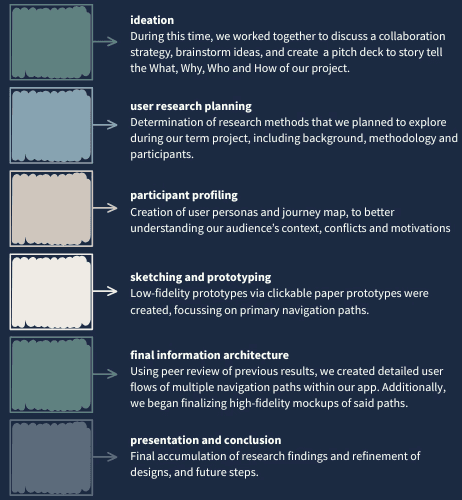
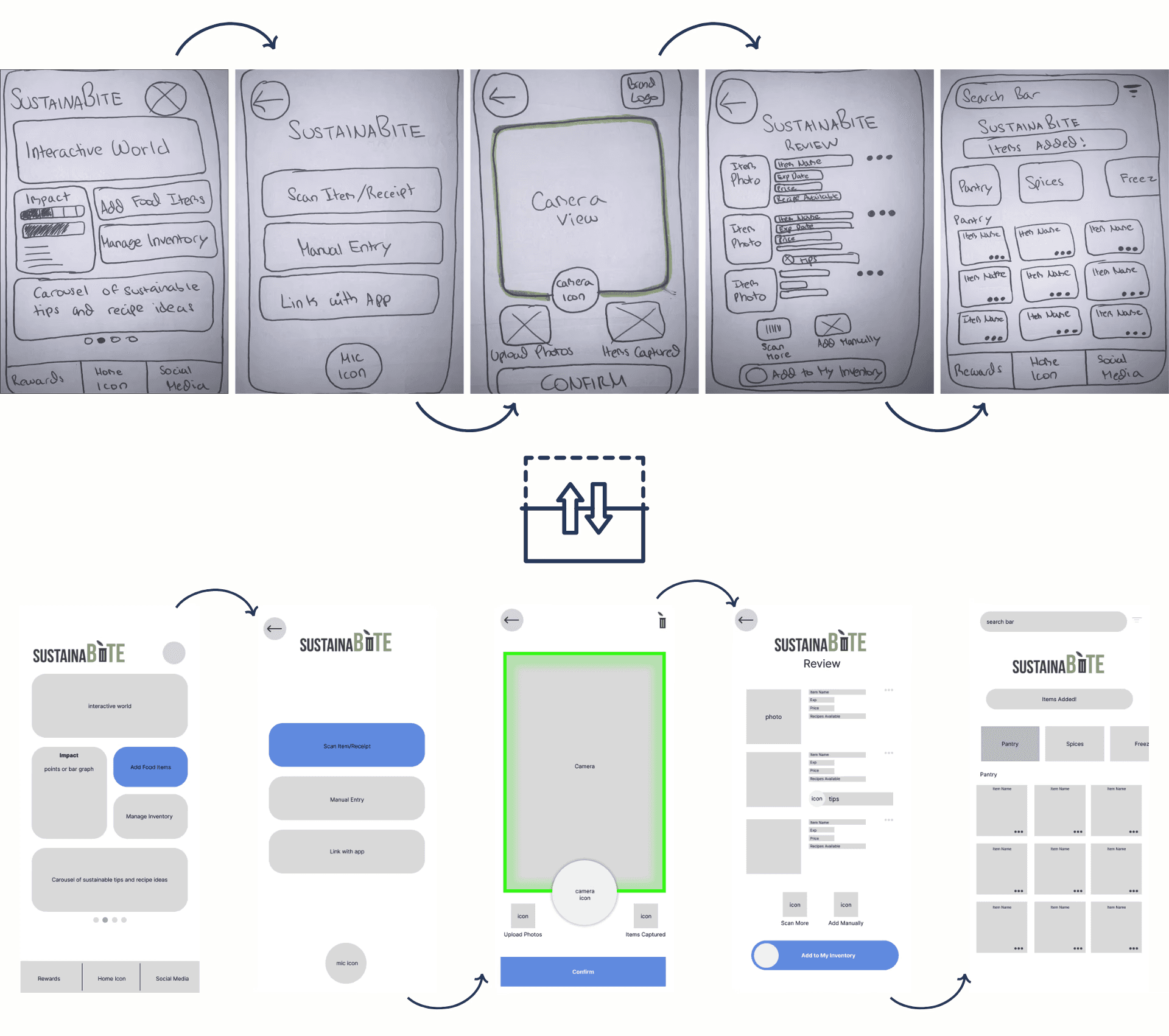
We started broad, sketching paper prototypes and low-fidelity wireframes to test the “golden path” - adding items, tracking expiration dates, and surfacing recipes.
Early usability testing confirmed the flow was clear and intuitive, but highlighted the need for stronger rewards and incentives to keep users engaged.
early prototypes
Paper sketches focused on the “golden path”: adding items, tracking expiration dates, and surfacing recipes.
Low-fidelity wireframes in Figma mapped out inventory management and recipe flows, while keeping navigation simple and intuitive.
usability testing
Conducted with peers, using clickable paper prototypes.
Feedback praised the clarity and flow but highlighted the need for stronger rewards and incentives to keep users engaged.
Based on feedback, we streamlined steps and adjusted layouts for greater clarity, while rethinking how gamification could enhance (not distract from) the core value.
refiing the process
Research-Driven Decisions
Based on surveys and user research, we identified features users valued most and removed less desired ones, such as social features and gamification, to focus on meaningful interactions.
Streamlining Features
By aligning design with user expectations, we prioritized essential flows, reducing development costs and improving usability.
Pain Points Addressed
Survey results showed that forgetfulness (71.4%) and over-purchasing (17.1%) were the biggest drivers of food waste, so we emphasized inventory tracking and expiration reminders as core features.
mapping the flow
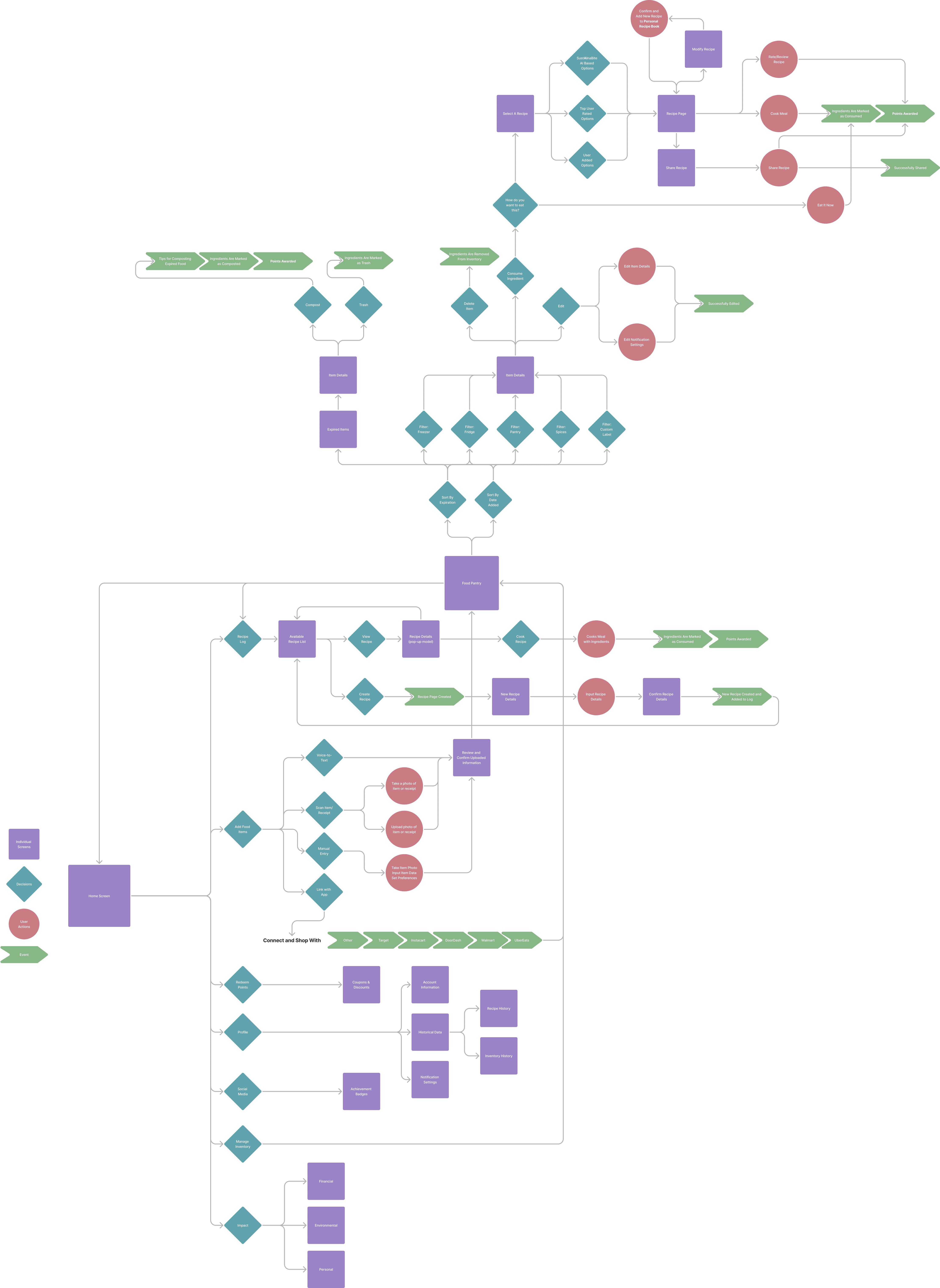
To make these insights actionable, we developed a detailed user flow to visualize how someone would move through the app.
Purposeful Pathways: Flows guided our structure, mapping every interaction from opening the app to completing key tasks.
Golden Path: Centralized around adding inventory, finding recipes, and reducing waste through actionable steps.
Visualization: Flowcharts ensured a human-centered design with seamless, intuitive navigation.
↦ final design
bringing it all together
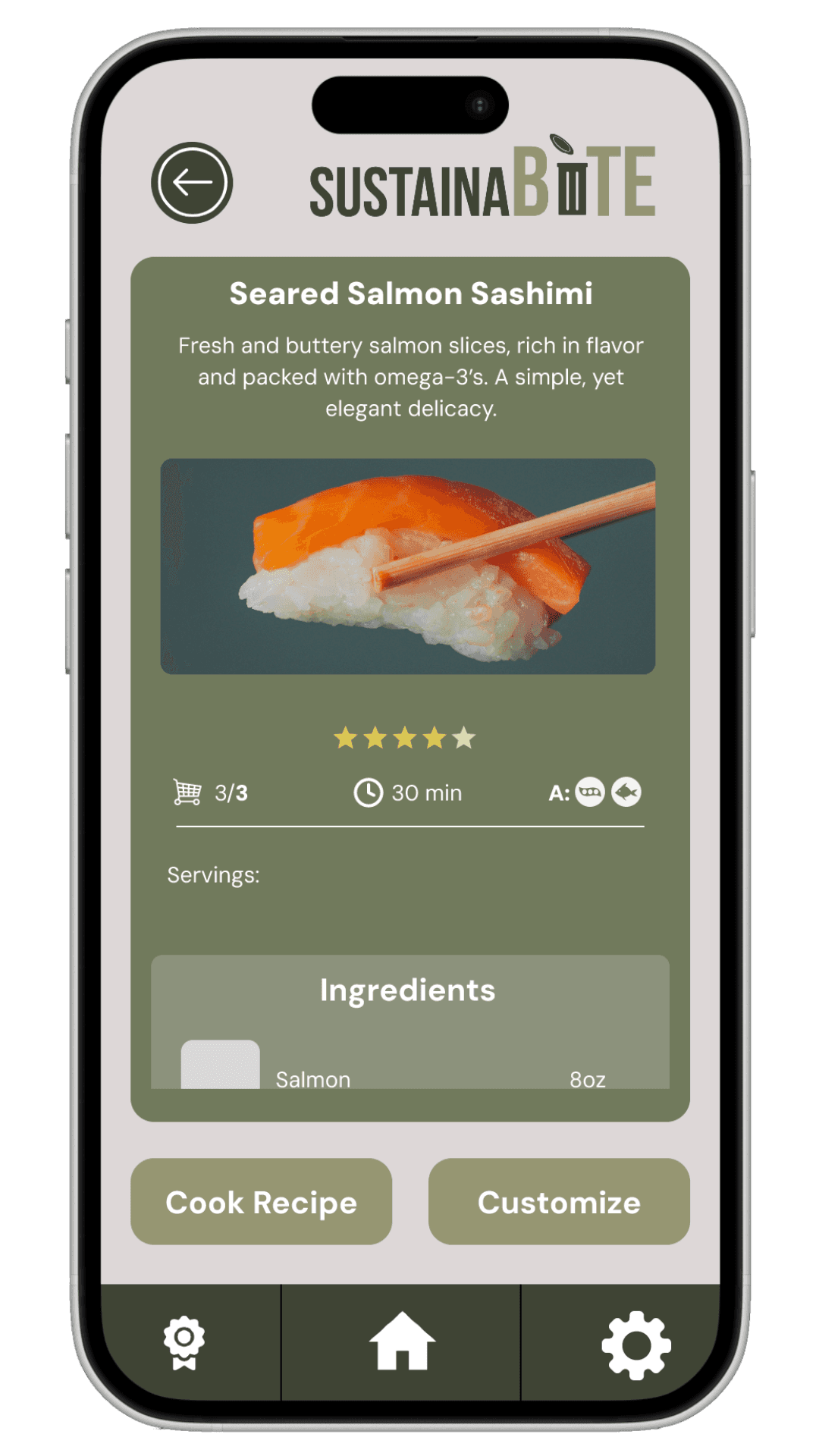
After multiple rounds of iteration, SustainaBite’s high-fidelity prototype brought our vision to life: a clean, approachable platform that makes sustainability feel practical and rewarding.
key features include:
Inventory Tracking: Scan receipts, barcodes, or add items manually. Smart reminders prevent food from being forgotten until it’s too late.
Personalized Recipes: AI-driven suggestions based on ingredients already at home, reducing waste and inspiring meal variety.
Savings Tracker: Visual insights into how much money users save by cutting down on wasted groceries.
Sustainability Tips: Quick educational touchpoints, from composting guidance to smarter storage practices.
design refinements
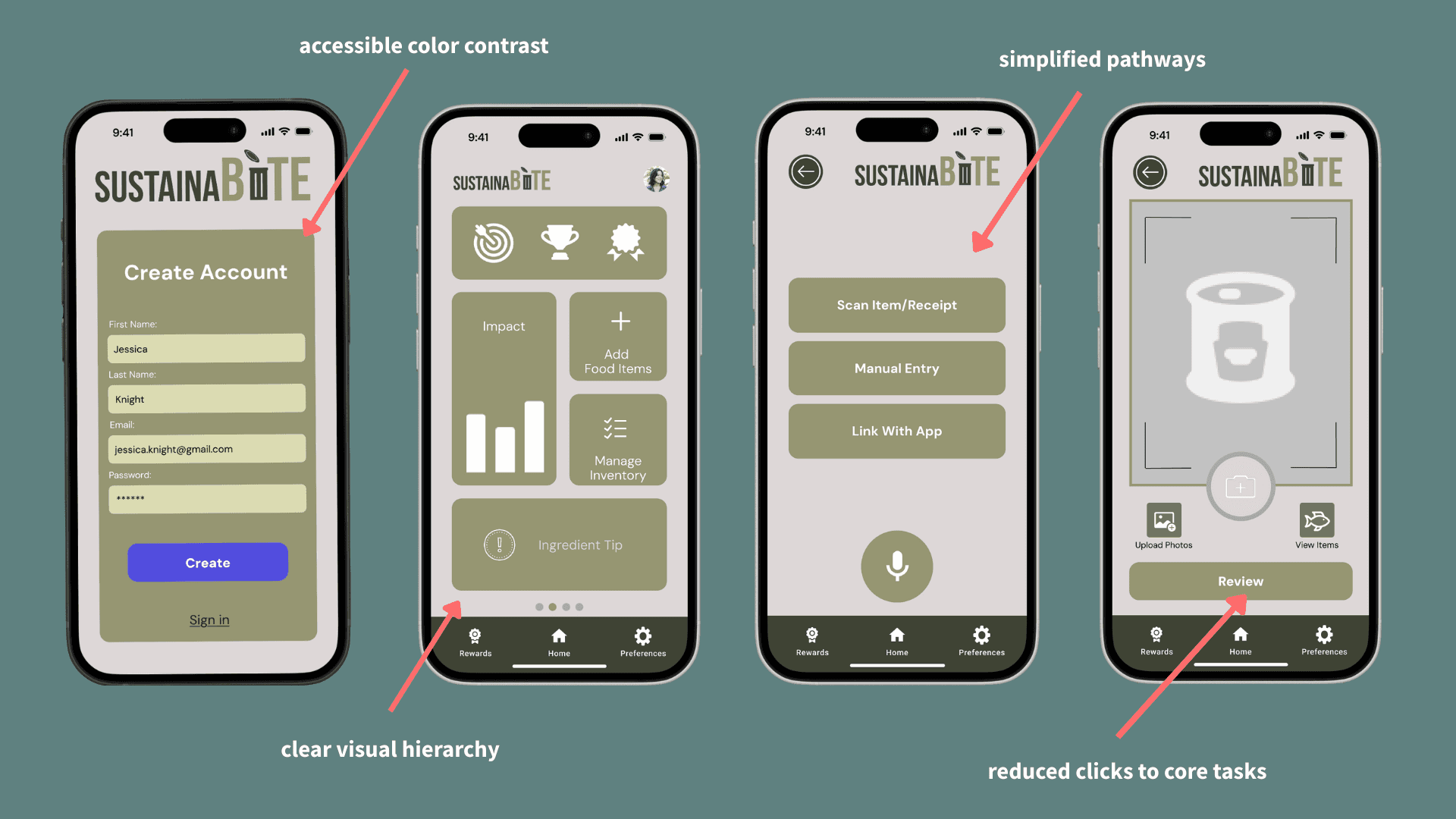
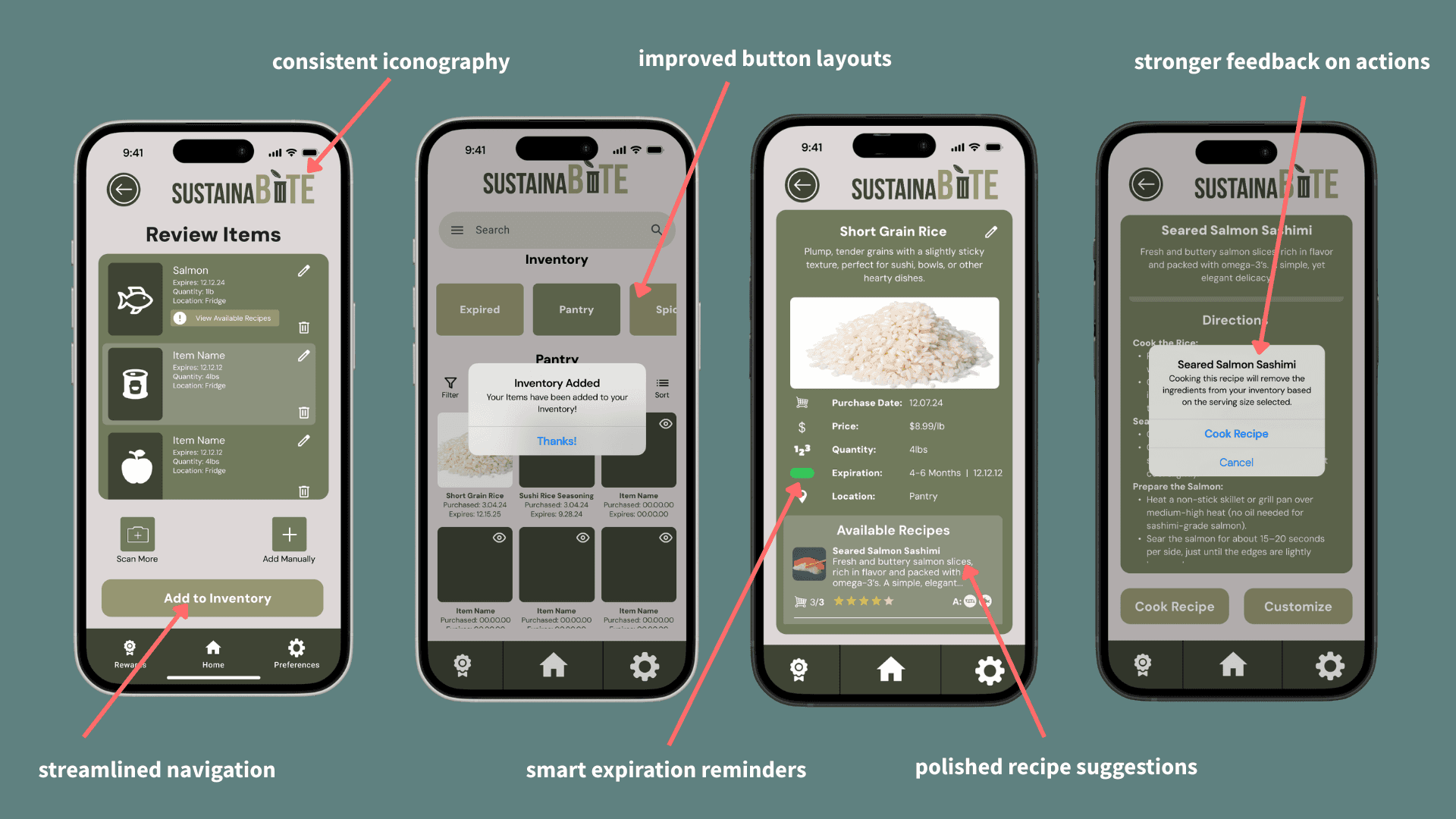
Simplified navigation and streamlined pathways for essential tasks.
Stronger visual hierarchy with clear button layouts, improved color contrast, and accessible typography.
Removed underused gamification features, focusing instead on direct value: savings, reminders, and easy recipe creation.
Created a polished, approachable interface that users described as “organized, useful, and a real money-saver.”
from prototype to polish
before (low-fidelity prototypes)
Paper sketches and grayscale wireframes focused on the golden path: adding inventory, tracking expiration dates, and surfacing recipes.
Layouts were functional but minimal — good for testing flow, not for aesthetics.
Usability feedback: flows were clear and intuitive, but users wanted stronger visual distinctions and more engaging feedback.
after (high-fidelity prototypes)
Translated core flows into a polished, accessible interface.
Added color, icons, and typography hierarchy to improve clarity and readability.
Streamlined navigation, with quicker access to inventory and recipes.
Refined buttons, spacing, and visual feedback for a smoother experience.
Usability feedback: described as “organized, easy to navigate, and genuinely useful”, with users highlighting the savings tracker as especially motivating.
↦ moving forward
While SustainaBite successfully addressed the core problem of household food waste, our team identified several opportunities to expand its impact:
Coupon & Reward System
Partner with grocery stores and food brands to offer digital coupons or points for consistent food tracking and sustainable actions — turning waste reduction into real savings.Enhanced Gamification
Add progress trackers, environmental impact stats (like carbon emissions saved), and optional challenges to keep users motivated without overwhelming them.App Integrations
Sync with grocery platforms like Instacart or Walmart Grocery to automate inventory updates, reducing manual effort and keeping shopping lists up to date.
Ultimately, SustainaBite is more than just a grocery tracker — it’s a way to make sustainable living approachable, rewarding, and part of daily life.